


Page 169 - final fill 160 v28 with bleed.ai
P. 169
Smuggling in India Report 2024-25     126


             Cryptocurrency in Smuggling


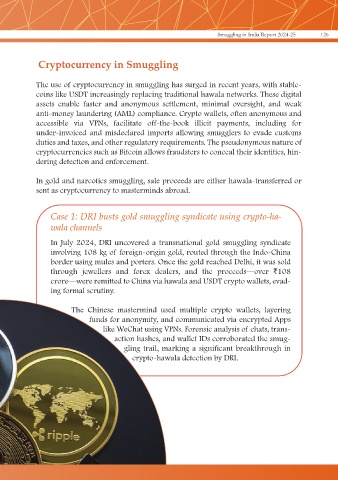
            The use of cryptocurrency in smuggling has surged in recent years, with stable-
            coins like USDT increasingly replacing traditional hawala networks. These digital
            assets enable faster and anonymous settlement, minimal oversight, and weak
            anti-money laundering (AML) compliance. Crypto wallets, often anonymous and
            accessible via VPNs, facilitate off-the-book illicit payments, including for
            under-invoiced and misdeclared imports allowing smugglers to evade customs
            duties and taxes, and other regulatory requirements. The pseudonymous nature of
            cryptocurrencies such as Bitcoin allows fraudsters to conceal their identities, hin-
            dering detection and enforcement.


            In gold and narcotics smuggling, sale proceeds are either hawala-transferred or
            sent as cryptocurrency to masterminds abroad.


                Case 1: DRI busts gold smuggling syndicate using crypto-ha-
                wala channels

                In July 2024, DRI uncovered a transnational gold smuggling syndicate
                involving 108 kg of foreign-origin gold, routed through the Indo-China
                border using mules and porters. Once the gold reached Delhi, it was sold
                through jewellers and forex dealers, and the proceeds—over  ₹108
                crore—were remitted to China via hawala and USDT crypto wallets, evad-
                ing formal scrutiny.


                       The Chinese mastermind used multiple crypto wallets, layering
                            funds for anonymity, and communicated via encrypted Apps
                                like WeChat using VPNs. Forensic analysis of chats, trans-
                                    action hashes, and wallet IDs corroborated the smug-
                                      gling trail, marking a significant breakthrough in
                                         crypto-hawala detection by DRI.


   final fill 160 v28 with bleed.pdf   169                                               12/19/2025   3:28:07 PM

